




Treasures of Reggio Calabria: A Journey Beneath the City
Beneath the streets of modern Reggio Calabria lies a hidden world shaped by Greek and Roman civilizations. This journey through ancient sanctuaries, walls, baths, and civic spaces reveals the underground treasures of Reggio Calabria and tells a story of continuity, resilience, and cultural identity spanning millennia.
Reggio Calabria’s Historical Treasures
- Griso–Laboccetta
- The Hypogeum
- The Greek Walls
- Roman Baths
- New Discoveries in Piazza Garibaldi
Where the Ancient City Still Breathes
From sacred sanctuaries to civic centers, the underground of Reggio Calabria preserves the spiritual, political, and urban heart of ancient Rhegion, offering an extraordinary Greco-Roman tour of the underground of Reggio Calabria.
The Sacred Origins of Urban Life
The long history of Reggio Calabria begins deep in antiquity, with evidence of continuous human presence for over three thousand years. From Iron Age settlements to Greek colonization and Roman urban expansion, the city evolved without interruption. Today, more than two hundred archaeological areas and hundreds of documented finds confirm this layered past. These remains are not isolated fragments but parts of a coherent urban system that once defined ancient Rhegion. Temples, roads, houses, and public spaces reveal how religion, trade, and governance shaped daily life. Exploring these underground treasures of Reggio Calabria means understanding how sacred rituals and civic organization laid the foundations of the modern city. Each discovery contributes to a broader narrative, making Reggio Calabria one of the richest archaeological landscapes in southern Italy.
1 Griso–Laboccetta: A Sanctuary at the City’s Core
At the heart of modern streets lies the Griso–Laboccetta archaeological area, the oldest known sacred site in Reggio Calabria. Dedicated primarily to Demeter and Persephone, this sanctuary dates back to at least the late 7th century BC. Excavations revealed terracotta architectural fragments, votive offerings, figurines, and ritual objects that illustrate centuries of devotion. Small interconnected temples once occupied this space, forming a spiritual center that influenced the surrounding urban layout. Later Roman modifications show how worship practices adapted over time. Today, Griso–Laboccetta stands as one of the most evocative treasures of Reggio Calabria, where faith, art, and community intersect. Walking through this site is an essential step in any Greco-Roman tour of the underground of Reggio Calabria.
Piazza Italia and the Hypogeum of Memory
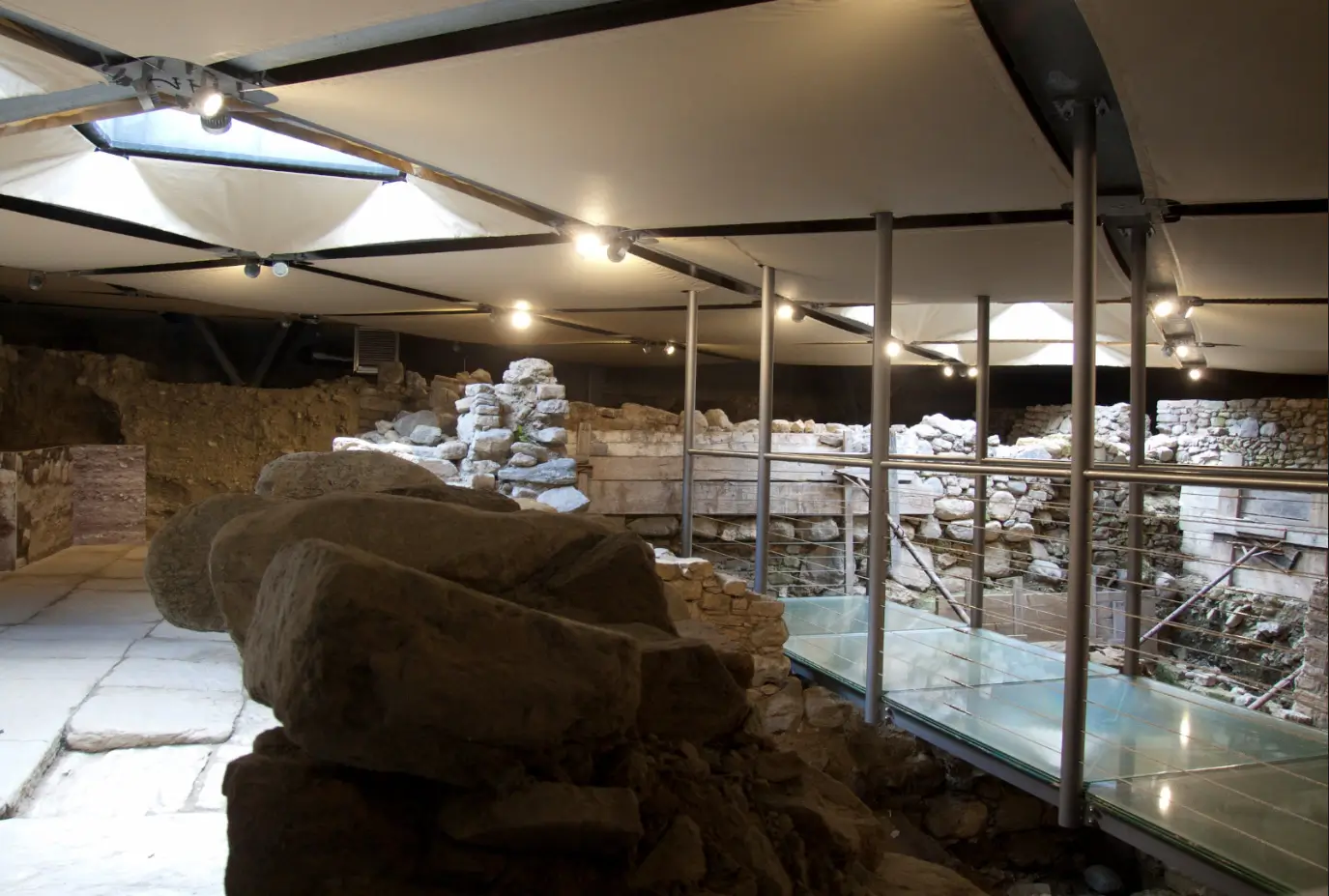
Beneath Piazza Italia lies one of the most complex archaeological sites in the city: the Hypogeum. Within just a few meters of depth, layers of Greek, Roman, Byzantine, Norman, and modern history overlap. Ancient walls, Roman rooms with cocciopesto floors, and traces of commercial activity reveal how this area functioned as the urban core, possibly as an agora and later a Roman forum. Sacred elements, workshops, and maritime trade evidence show a city in constant transformation. The Hypogeum is not a static ruin but a living archive. It perfectly represents the underground treasures of Reggio Calabria and offers visitors a rare chance to physically traverse centuries during a Greco-Roman tour of the underground of Reggio Calabria.
Stones That Guard Time and Identity
Defensive walls, civic buildings, and hidden baths reveal how Reggio Calabria protected itself, governed its people, and celebrated daily life through architecture that still defines its underground heritage.
The Greek Walls and Urban Defense
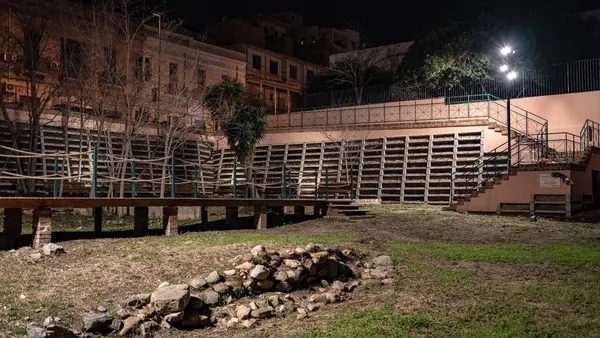
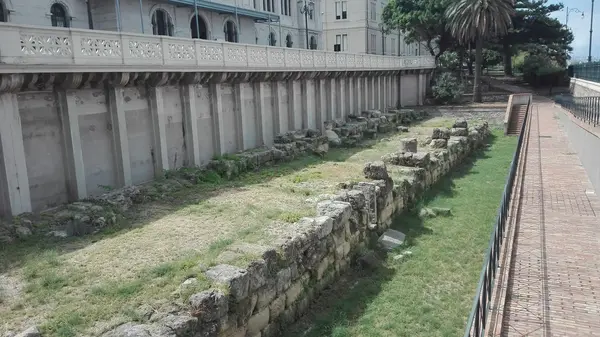
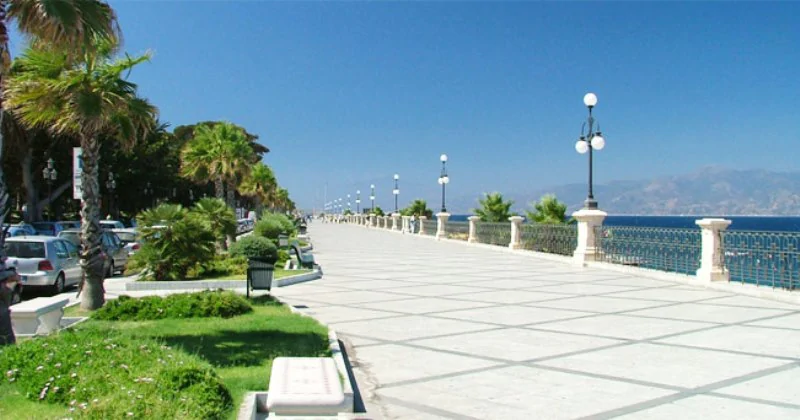
The remains of the Greek city walls emerge in several areas, including the Lungomare Falcomatà, the Hill of Angels, and the Trabocchetto Park. These fortifications once enclosed ancient Rhegion and controlled access to the Strait of Messina. Built with local stone and brick, the walls used a double-curtain system filled with earth and rubble, ensuring strength and stability. Although heavily reconstructed after earthquakes, especially in 1783, the surviving sections preserve the logic of ancient military engineering. Dating mainly to the 4th century BC, these walls reflect the city’s strategic importance. They are enduring underground treasures of Reggio Calabria, silently guarding the memory of conflict, resilience, and survival.
Roman Baths: Daily Life Beneath the Sea Breeze
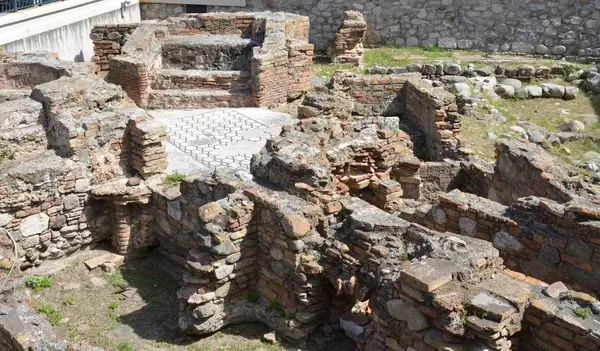
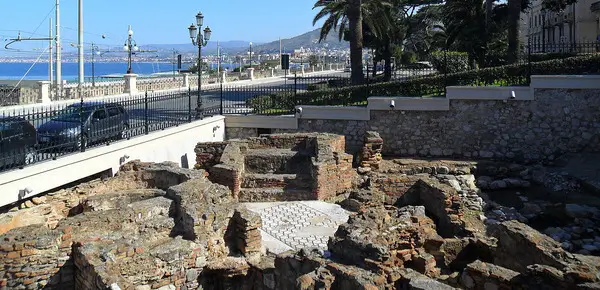
At the end of the Lungomare, the Roman Baths reveal a more intimate side of ancient life. Discovered after the 1908 earthquake, this small bath complex likely belonged to a private residence. Despite its modest size, it features a tepidarium, calidarium, cold bath, and a changing room decorated with a striking black-and-white mosaic. Marine-themed painted plaster fragments add further elegance. Hidden for centuries beneath later fortifications, the baths survived thanks to overlapping layers of history. Today, they stand as refined underground treasures of Reggio Calabria, illustrating how comfort, beauty, and social ritual shaped Roman daily life during a Greco-Roman tour of the underground of Reggio Calabria.
Civic Spaces and New Discoveries in Piazza Garibaldi
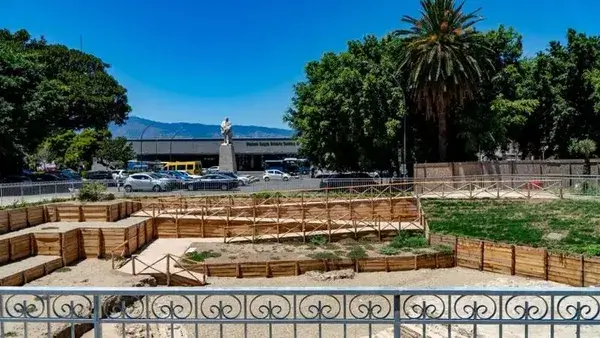
Recent excavations in Piazza Garibaldi have uncovered some of the most promising archaeological evidence in the city. Roman tombs, temple foundations, drainage systems, and large masonry structures reveal an extensive underground urban network. Scholars believe this area may soon become the most significant archaeological zone in Reggio Calabria. According to experts, the construction techniques and scale of the remains are unprecedented locally. These discoveries confirm the vast underground treasures of Reggio Calabria still waiting to be revealed. They also reinforce the importance of preservation and research, offering future generations an even richer Greco-Roman tour of the underground of Reggio Calabria.
The 7 Wonders of Reggio Calabria
Reggio Calabria is a city where history, culture and breathtaking landscapes blend together. These seven wonders represent the true soul of the city, suspended between the sea, ancient civilizations and timeless beauty.

Eat, Drink & Shop
Just tap an icon to find places near you.
Quick Essentials
Need medicine, cash or daily essentials? Find nearby pharmacies, supermarkets and ATMs in one tap.
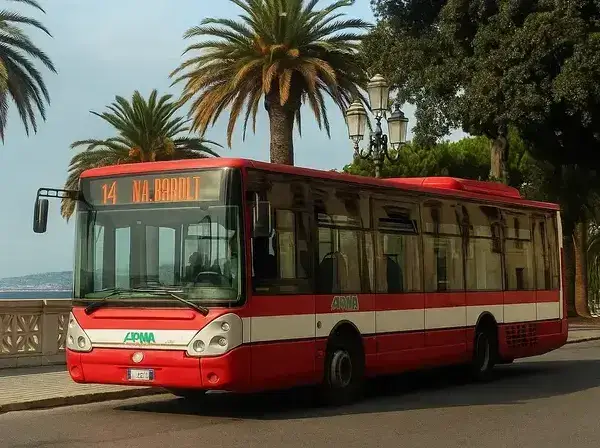
Line Bus Reggio Calabria
Find the stops, schedules, and connections for each direction and plan your trip easily.
Bus Tickets


Explore Nearly Attractions
Explore the hidden treasures of Reggio Calabria and experience its ancient wonders.