



Echoes of Magna Graecia’s vibrant past, preserved in stone and memory
Discover the Cultural and Civic Legacy of Greek Archaeology in Reggio Calabria
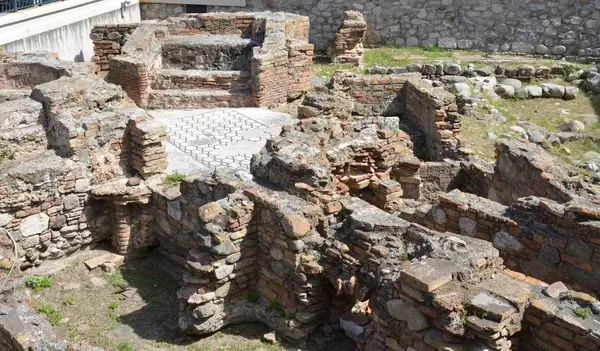
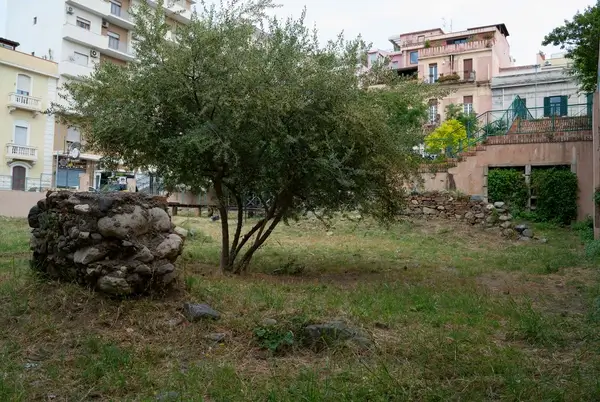
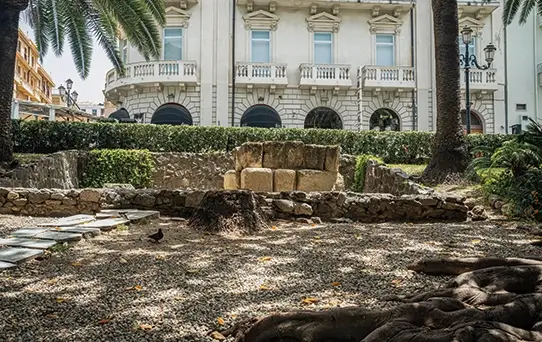
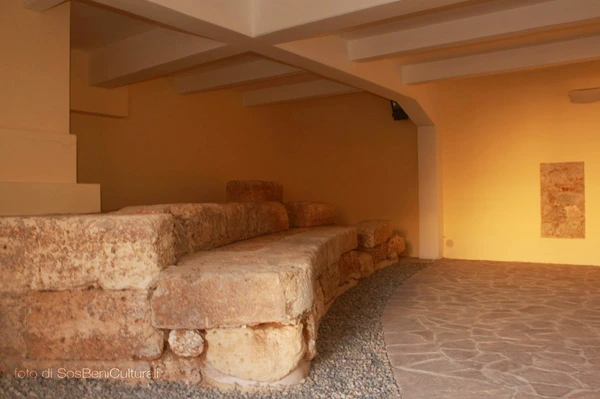
estled in the heart of Reggio Calabria, the Odeon is a remarkable example of Greek archaeology Reggio Calabria. Unearthed in 1920 during construction on Via XXIV Maggio, this small theater dates back to the mid-4th to early 3rd century BCE. Paolo Orsi, the eminent archaeologist, first studied it. Today, visitors can see two curved sandstone steps divided into sectors by a central stairway. These remnants hint at the once-grand cavea, which may have had seven wedges surrounding a 20-meter diameter orchestra.
Although no flooring or elaborate decoration survives, three Ionic terracotta capitals from the 3rd century BCE suggest the theater’s original ornamental façade. Furthermore, the Odeon was more than a venue for music. Historical accounts indicate it likely served as a Bouleuterion, hosting civic and political gatherings. For example, in 344 BCE, Greek communities from southern Italy and Sicily may have met here to plan strategies against Carthage.
This dual role as both a cultural and political hub highlights its central place in ancient civic life. Perched on a gentle hill slope, the Odeon offers a glimpse of architectural ingenuity. Moreover, it connects visitors to the social heartbeat of a city shaped by Greek influence. Today, the modern building that shelters these ruins is maintained by the Soprintendenza Archeologica della Calabria. Thus, travelers can step directly into a past where music, politics, and community intertwined.
Plan Your Visit
Easily reach the Odeon and immerse yourself in Greek archaeology Reggio Calabria.
Eat, Drink & Shop
Just tap an icon to find places near you.
Quick Essentials
Need medicine, cash or daily essentials? Find nearby pharmacies, supermarkets and ATMs in one tap.
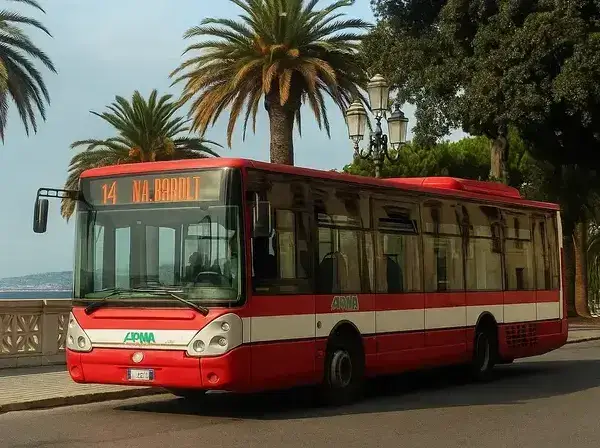
Line Bus Reggio Calabria
Find the stops, schedules, and connections for each direction and plan your trip easily.
Bus Tickets


Explore Nearly Attractions
Just steps from the Odeon, uncover more of Reggio Calabria’s gems and hidden treasures